Showing posts with label Tiresias. Show all posts

Monday, October 17, 2011

[10] Darkness Seen Through Tiresias’ Eyes (7)
The enemy is a straw doll with a chainsaw between its legs.
As this blogger has pointed out through a series of earlier blogs, the real dilemma of Latvia is not the Harmony Centre (Saskaņas centrs) and its alleged tilt toward Russia, especially Moscow and its premier politician, Vladimir Putin, but that The Great Northern War http://en.wikipedia.org/wiki/Great_Northern_War is being fought surreptitiously all over again.

The current political horsetrading is said to be a matter of a coalition of Latvian nationalist parties entering their coalition in order to oppose the Harmony Centre. It has been amazing to watch how these “Latvian nationalists” are surrendering themselves to the West, which is lead by the capital of a not so certain European Union—Brussels.
The chief leaders of the “Latvian nationalist” drang nach West is yet another coalition called “Vienotība” (Solidarity). A fractitious group, Vienotība (V) has sought to ally itself with a number of political parties, the chief of which is led by a former President of Latvia, Valdis Zatlers. It is Zatlers who precipitated the dismissal of the 10th Saeima by a People’s Referendum sanctioned by the Latvian Constitution.

The Zatlers’ Reform Party has just been demolished by six of its elected members (the so-called Olšteina Reform Group) abandoning the party and demanding from the “Latvian nationalist” coalition two ministerial posts to assure the nationalist coalition a majority vote in the Saeima. [One may presume that the ORG will—if successful—attempt to play the same role that the Likud plays in Israel.]

What are the “goodies” that are to accrue to the “Latvian nationalists West” for drumming and trumpeting the West?
The resurrection of Black John and the greening of Latvia.
Upon closer examination, we will discover that the West is a far more complex picture, more a collage than a picture. The reason for this is that in the case of Latvia, the real power of the West is possessed by and  expressed through Swedish banks.

Whether the Swedish banks operate in the interests of the Swedish goveranment is a question that cannot be answered without assigning it the role of “hidden hand”. This is not something this writer has the resources to answer in a definitive way. However, it is highly unlikely that the Swedish banks precipitated the handout of easy credit to the Latvians out of the purity and goodness of their hearts.

One may say that it was the great misfortune of Latvians, who having just (1991) escaped Soviet bondage and having no experience in capitalist markets, took the credit all too trustingly, believing it was all above board. Alas!

The “Latvian nationalists”—at least the current coalition-right, which likes to call itself such—make no mention of the actual powers that the West represents. There are no doubt many reasons why the “Latvian nationalists” are so secretive.

One recent reason for the secretiveness of the Latvian right wing coalition is that the truth might provoke a Latvian version of OWA or Occupy Wall Street phenomenon. In Latvia it could metamorphose into a movement called “Occupy Swedish Banks in Latvia” (OSBL), at the same time asking specifically for the resignation of the President of Latvia, Andris Berzins, who as a former bank president cannot escape the suspicion of being a lobbyist of Swedish bank interests.

[This writer wonders why the somewhat in your face news gathering organization that calls itself “Pietiek kampt” http://www.pietiek.com/ has not provided the Latvian public with research into the subject of Swedish banks.]

The chief point in making the above points is that there are two major interest groups (not one) contesting their influence over Latvia. One is the East through its affiliate, the Harmony Centre; the other is the West and Swedish (Scandinavian) banks through their affiliate the “Latvian nationalist block”.

Is it possible that the real interests of the Latvian people is actually not either of these direction signals, one that orientes them not with an arrow (>), but a sign that says here (X)?

If the Latvian people (this writer envisages them as an English language speaking equivalency that cultivates the language of its origins at home on the basis of free choice), chose an X or here location, then an altogether different geopolitical orientation emerges.
We have arisen, we are here, we are the X of Johns.
This is the reason why this blogger presents the argument that allows for the possibility of Riga becoming the future capital of Europe, replacing Brussels and the EU (European Union) with a United Europe (UE) as the geopolitical structure that the Latvians strive for. Such a United Europe would necessarily include what is now called the East and West. In other words, Latvia would then no longer be at the margins of the West as defined by Brussels, but at the centre of now and future geopolitical events.

P.S. About the photos: On October 15, 2011, "The Temple of Black Johns in Remembrance of Destroyed Forests" in Braslavas pagasts, Latvia, celebrated a "Remembrance Day for Trees". Major benefactors of the deforestation of Latvia are Swedish banks, because to cut down forests is the only way that most Latvian people can repay their debt to the banks and the oligarchs behind them.

Saturday, October 8, 2011

[7] Darkness As Seen Through Tiresias’ Eyes (4)
An apple tree axed and murdered.
The fantasy of infinity begins at home. Elaine Meinel, daughter of a famed astronomer http://www.osa.org/About_Osa/Newsroom/Obituaries/AdenMeinel.aspx , reflects on the obsessions of her father and the influence of the Zeitgeist of our times on him and us, writes: “Watching these elites struggle with the banking/trade mess which they carefully cultivated and grew is amazing.  That is, their desire for infinity has destroyed the entire system of commerce and trade which is now tremendously out of balance and out of kilter with reality and is now in full self-destruct mode.  The system is desperately trying to reset itself backwards from infinity and they are all trying desperately to push it back into the ‘grow to infinity’ mode.” –Elaine Supkis http://emsnews.wordpress.com/2011/10/06/nobel-prize-astronomers-save-the-world-from-the-great-attractor/#more-12949
And inevitably ‘they’ will fail, because a recalibration of the system or, failing that, a system’s failure—a burning out of all bearings—is what awaits our Deux ex mahina or matrix as we speak. That is how this writer sees the times ahead. Latvian are not excluded from this inevitability.s
Another angle of the apple tree corpse.
The Latvian politicians have been on their own “infinity” train for a very long time. What is so interesting about the political infinity of Latvian politicians is that their infinity does not have a straight line (some folks do), but goes off in all directions at once.

The vehicle of this penumbra of infinite conceit, a kind of shadow that embraces the entire globe of being, begins with the “democratic majority of Latvians” engaged in repressing all things populist. Among the repressed are not only dissenting Latvians (the alleged minority), the Latvian poor, all recent Latvian emigrants, Latvians who do not speak Latvian, and a myriad of other unmentionables. Actually 99% of Latvians are among the repressed. You guessed right if you understant that the “democratic majority” consists of but 1%.

While it is not possible to identify all the elements that go into making the 1% of elites, it is quite possiblel to name the Zugspitze or as Latvians are wont to call, the Rockets or Motors.
The face of the perpetrator and murdered.
The first Zug (puller of the rope of infinite growth) is of course President Andris Berzins. While his vision for Latvia is as obscure to Latvians as to himself, he is suspect of being a lobbyist for Swedish banks. The suspicion comes as a result of Berzins being a retired bank president of a Swedish affiliate.

The second Zug is Valdis Dombrovskis, the Latvian Prime Minister. He is said to have co-authored a book notoriously propagandistic in favor of banks. The actual author of the book http://books.google.com/books/about/How_Latvia_Came_Through_the_Financial_Cr.html?id=D-b6Zyhd2JEC is a Swedish liberal neo-capitalist by the name of Anders Aslund. When all is said and done, Dombrovskis is a sheep with Swedish wool over his eyes.
The third Zug is former President of Latvia, Valdis Zatlers, who is at the time of this writing trying to form a the next political coalition that runs the Latvian government. While Zatlers is a renown anti-populist and elitist (his professional life was that of a surgeon), he cannot be associated with any Swedish bank. Nevertheless, his financial advisor, Vjaceslav Dombrovskis http://www.baltic-course.com/eng/analytics/?doc=43882 an exponent of liberal neo-capitalist infinite growth philosophy.
The fourth Zug is the Latvian Minister of Finance, Andris Vilks http://www.mk.gov.lv/en/mk/sastavs/vilks/ , has a decade long work record for the Swedish SEB bank http://en.wikipedia.org/wiki/Skandinaviska_Enskilda_Banken . One can not not suspect him of being a Swedish mole in Latvian government.
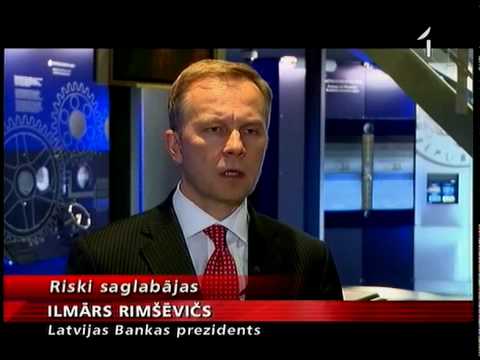
The fifth Zug is the President of the Latvian Bank, Ilmars Rimsevics http://i2.ytimg.com/vi/N5Cn-V-QLM8/0.jpg [BA, economics (Riga), MBA (Clarkson)]. His bio is illusive, not to say missing from the internet. He is known for his liberal neo-economist views, which includes infinite optimism and growth by way of the squirrel wheel for ever.
The Perpetrator caught with his Thing showing.
Needless to say, most of the oligarchs of Latvia are on the squirrel wheels made in Scandinavia and have little sense of what is good for Latvia (as a community that needs much healing and a plan for economic development) for the long term. Growth, infinite growth, is—so it seems—everyone’s favourite motto, including the populists’. How else could it be? All of Latvia’s poor (=99%) cannot but demand betterment of their dire economic condition. As it is, they are forced to cut down Latvia’s forests at the behest of Swedish banks.

What is the alternative?
Please, trees, do not do this to me!

The answer is, of course, creative thinking. However, not the kind of creative thinking that goes with cutting decorative flowers, but the kind that identifies with those at the bottom of the barrel, but with a will to live at almost any price. The ‘almost’ time is here for the Latvians.

Latvians must do what the desperate but determined to live must do: Do the unpopular, the dismissed, the unacceptable (never re-examined), all those jobs that are most unpopular, like undertaker, temple keepers of unpopular gods, those who collect, then hide excrement that others shit.

What the populists are in need of doing to resurrect themselves as the 99% that they are, is to enter in league with the forests. No more cutting of Latvian trees by Latvian populists.

How is this to be done?
Too late to cover up the shame.  For more click http://melnaysjanis.blogspot.com/

Before I write more, here is what is happening in America that surely finds an echo in Latvia. See what you think what applies: http://www.alternet.org/story/152651/11_facts_you_need_to_know_about_the_nation%E2%80%99s_biggest_banks?akid=7680.171186.obV8Ui&rd=1&t=18

(With photos at http://rigacapital.blogspot.com/  To be continued… )

Friday, September 30, 2011

[5] Darkness As Seen Through Tiresias’ Eyes (2)
Preelection appearance of politicians running for office,
When President Karlis Ulmanis vanished from the government in Latvia, Spidola did not jump after him into the Daugava River as she had done after Lachplesis.

As Menesnīca, impersonated moonlight that illumines night and is said to have once guided proto-Latvians in night-fighting tactics, Spīdola did not see Ulmanis as a reincarnation of her mythic lover, Lachplesis.

The failure of Ulmanis/Lachplesis to mate in the netherworld with Spidola [who among other things represents the subjective (re democratic and populist) nature of the psyche] is at the root of the political troubles of Latvians in 2011.

As noted in many earlier blogs (see http://the4thawakening.blogspot.com/  among others), the word “populist” is belittled and repressed by all officials and media in Latvia.

The Latvian state rules as a rhetorical democracy, one which uses rhetoric not as proto-Latvians had it by putting the endearing word in the forefront of communication, but by using rhetoric as a persecutorial (vajāšana) device. A lie is no less persecutorial even by another name.

The tactics of the Latvian government are imitative of the tactics of persecution practiced by the neo-Christian (Catholic, later also Protestant/ fundamentalist) church. That is to say, the subjectivity of the individual and collective (populists created such subjective language as is represented by the endearing word) is repressed in favor of an official story, the ‘good news’.

The first line of control of the state is government rhetoric with regard to history—history not as actual, but as created by government. Thus, for example, the betrayal of the Latvian myth and state by Karlis Ulmanis is never mentioned, but the brutality of the Soviet authorities is. The failure to mention the failure of the Latvian myth results in a cultural stutter and a further weakening of communal bonds.
The right course to pursue is....

The second line of control is rule of the country by “parliamentary” democracy. The rhetoric of the government insists that ‘parliamentary’ is synonymous with ‘democratic’, even while the government is democratic only for the ruling elites. Latvians essentially have no idea (either suggested or taught) that the greatest degree of democracy is identified with populism, which stands for the people (right, left, or center).

Thus, President Andris Berzins was elected and put in office without the participation of the Latvian people. Though as a former banker (he receives the highest retirement benefits in Latvia), Berzins is compromised by suspicions that he is a proxy of Swedish banks. There is no mention of the latter fact in public space.

Insofar the Lachplesis character is reflected in the highest office of Latvia, President Karlis Ulmanis effectively reduced the President’s mythic role to one of empty rhetoric. Indeed, the authority of the President since Ulmanis has not been confirmed as anything other than make-believe because unrealizable. At the same time, any potential leader from the ranks of the populists has been suppressed

There is nothing strange about the repression of democracy, if we remember that Lacplesis died fighting with the enemy, while Karlis Ulmanis died of circumstances created by the outbreak of WW2.

For all of Ulmanis’ achievements in raising the state of economic well-being among Latvians in the 1930s, Spidola, the helpmate of Lacplesis, refused to recognize the former President of Latvia as representative of the Latvian community and to this day has not found any Latvian leader to warm her bed.

These circumstances leave the Latvian soul (foundation rhetoric here) enduring a tense, essentially intolerable time.

The soul of the community (nationalist or no) wants to know if it, too, is but government rhetoric or whether behind the rhetoric stand men and women, leaders, who are willing the certify their rhetoric as meaningful authority by giving example. The example must necessarily include very real sacrifice if government officials ask the public to sacrifice. At this time the level of sacrifice among Latvian government officials is not even that of a car driver in a car race in Tunisia.

If I remember right, a Korean teenager projected Lachplesis http://www.eurotales.eril.net/quiz2/lat8.jpg as a character in a comic book. This—though never admitted by political authority or mentioned in the news and information media—is an accurate projection of the character of today’s politicians in Latvia and other countries.
The audience and the empty screen.

However, as acute as the problem of democracy and equality is in a country of 1.9 million people, our civilization has reached a time when its governments are basically without authority in all countries.

For Latvia, the political and economic suffering was first brought it by the ‘Harvard boys’, the club of academic ideologues, who in the early 1990’s instituted in the Baltics the official ideology of the West, re liberal neo-capitalism. I am sad to say that this came about through Latvian “exiles”, who after nearly fifty years abroad had lost their culture as ‘natives’, and had become missionaries on behalf of the West. Therefore, the Latvian people were encumbered by, both, the laws of their first republic and the post-Soviet “victors”. To this day they see “no exit”.

The exits continue to be sought by the Latvian people, while the officials play games of mirrors and sleigh of hand. While these tactics are evidently successful in terms of keeping government in office, communal chaos is the real result. What can be done to avert extinction?

How is one to change the economic system and the anarchistic civilization encouraged by corporations with the right to act as individuals, a presumption it borrowed from the church http://procinwarn.com/whatchurch.htm ? While one may always hope that a church has the authority of sacrifice to back it up, the corporation has replaced sacrifice with money.
The hard question no one is willing to answer.
Who is producing the irresponsible individual? Is the Federal Reserve and similar institutions a corporate individual?

In some respects Latvija is not all that different from Greece.
Complete text of post at http://rigacapital.blogspot.com/

Tuesday, September 27, 2011

One mother's Latvian condition.

[4] Darkness As Seen Through Tiresias’ Eyes (1)

The famous play by Sophocles known as “Oedipus Rex” or “Oedipus the King” has long been the amazing gelatin pudding that Sigmund Freud baked at the beginning of the 20th century.

Freud’s interpretation of Sophocles’ play, taken as if from the frothy top layers of the pudding when not yet set, seemed for a time credible enough.

Summary of plot: A son is taken from his mother’s breast at an early age and transported to another country. He happens to return to the country of his origin, kills the dragon (Sphinx) that threatens the city, and gets—as his prize—to marry the Queen, who is a widow. As it happens the Queen turns out to be his mother.

The mirror of reality.
The question of what happened that Oedipus should be removed from his mother’s breast and taken to another country constitutes the early mystery of Sophocles’ play.

The traditional explanation (and the one apparently encouraged by Sophocles’ himself) is that the King of Thebes, Oedipus’s father, did not want the boy, and to be rid of him had him exposed to the elements on the highest mountain nearby.

The task of taking the infant to the mountain top and leaving him naked and ankles bound to the elements is entrusted to one of the shepherds  of the King. The shepherd however takes pity on the infant and takes him to the kingdom of Corinth on the other side of Mt. Citheron. The childless King and Queen of Corinth adopt the infant for their own.

To prove to King Laius that his son Oedipus did not survive the night, another infant is killed in his place and his body is shown to the king as that of his own son. The dead infant is of course from one of the infants that are periodically offered to the Sphinx, a composite of all the Gods who receive human sacrifice.
The light to light the cave of Dismal.

The loss to Oedipus is that while his life is not exposed to risk and therefore he stays alive for sure, he loses his chance to be raised as the next king of Thebes. He will have to be satisfied with being a prince in a neighboring country, but remain an orphan to the role he was born to in the city-kingdom of Thebes.

There is yet another version of why the infant Oedipus was exposed to the elements. This version is motivated by the need to expose the infant to the will of the Gods.

That is to say, if Oedipus survives the night and is found alive the next morning, the citizens of Thebes will believe that the Gods have given a sign. The message is that the King’s son is fit to become the next king of Thebes. [For my version of the play http://rigacapital.blogspot.com/ ]

What is it about this story of events at the city of Thebes that connects with events in Latvia in our time?

Something like a kitchen cuboard that was.

The answer is to be sought in myth, be it sourced in an actual event or a fantasy. If a fantasy becomes part of the rhetoric of a nation so much so that it is believed to be actual and people act on it if they are ever called to re-found their nation. If the heroism of the past is imitated today, then heroism remains operative in our own time.

The founding myth of Latvia—albeit more than artificial and well worn by the Age of Enlightenment, which emerging Latvians nevertheless felt compelled to adopt as their own—is “Lāčplēsis” (literally: Wripper of Bears).
Whatever this is.

While the poet’s (Pumpurs) mythic hero is claimed by the Earth, when he falls into the Daugava river hugging the Black Knight, he is reassured resurrection by his lover Spidola (Bright One). Spidola jumps into Daugava and shouts: “The battle, Lacplesi, is not over yet. Spidola is coming to help you.”

Reassured of a mating with Spidola on the other side of the Sun (Aizsaulē), the mythic hero is indeed called to a reawakening. Be that as it may, he is reborn as the President of Latvia, one Karlis Ulmanis.

What does Ulmanis do when the Soviets cross the border of Latvia?
The furnace and the chimney.
Ulmanis was forewarned of the event if only by reduction and deduction: the Baltic Germans by special arrangement between Stalin and Hitler were fleeing Latvia for Germany. This writer, who had a German nanny at the time (1940), should know. His nanny offered his parents to take him to Germany with her. Germany was presumed to offer relative safety in those uncertain times. His parents chose not to separate their children to favor one.

However, when show down time came, President Kārlis Ulmanis did not resist the Soviets.

He did not declare war on the Soviets; nor send armed men to resist Stalin without a declaration of war; nor offer a barrage of resistance rhetoric; nor put a pistol to his head when the first Soviet official dared enter his office without his permission and his guard was shot.
Rage, rage against the dying of the light!*

Instead, he took a job in the Soviet Union as manager of a collective farm. Had war not broken out, he would have lived many years yet. When the Soviets obliterated his grave, they had not premeditated his death, but took advantage of the circumstance.

(To be continued… )

*Photos are of an apartment assigned to a mother with three children--before renovation.